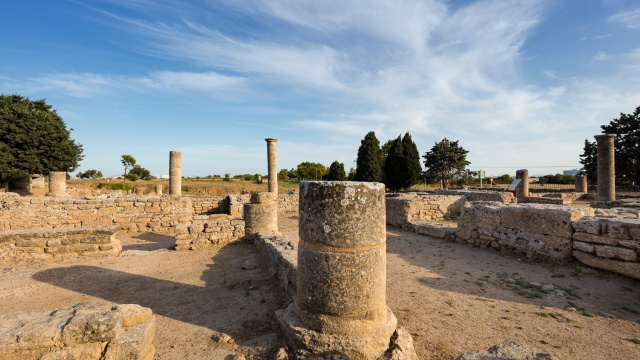
Ciutat romana de Pol·lèntia (zona arqueològica)
Discoveries from the 16th century sparked archaeological research in Pol·lèntia, which continues from early 20th-century excavations to the present.
The first documented references to Pol·lèntia date back to the 16th century, following accidental discoveries such as the bust of Velated Augustus, which marked the beginning of archaeological studies that continue today. The first systematic excavations began in the 1920s under Professor Gabriel Llabrés Quintana and Rafel Issassi. In 1936, the Civil War halted progress, but research later resumed with renowned archaeologists such as Almagro, Tarradell, Arribas and Wood. From the 1950s onward, the Hispanic-American Archaeological Centre, funded by the William Bryant Foundation, continued the work until the late decade, after which responsibility passed to the Municipality of Pol·lèntia.
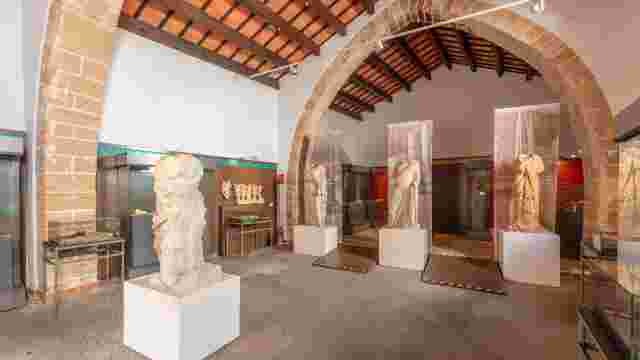
Museu Monogràfic de Pol·lèntia
Museum in a former 16th-century hospital showcasing finds from Pol·lèntia: ceramics, glass, jewellery, marble sculptures and Roman necropolis exhibits.
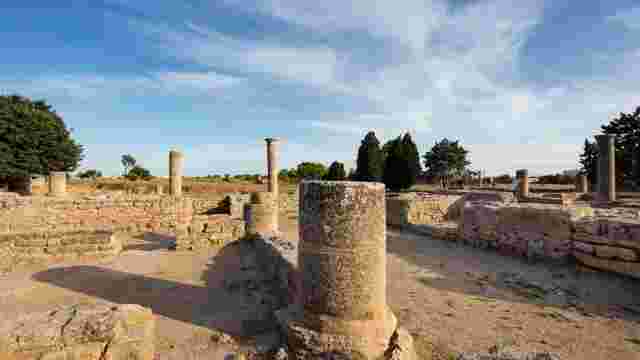
Ciutat romana de Pol·lèntia (zona arqueològica)
Discoveries from the 16th century sparked archaeological research in Pol·lèntia, which continues from early 20th-century excavations to the present.
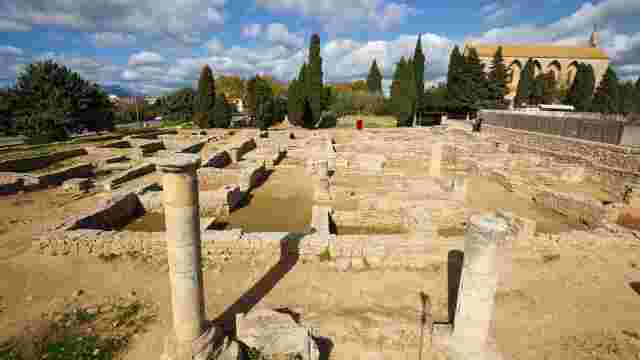
Zona arqueològica
History and excavations of Pol·lèntia from the 16th century to today, with key discoveries and major international archaeological research.
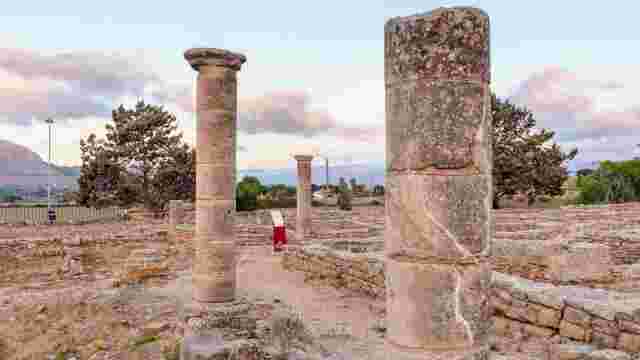
La Portella
Area near the historic centre with Roman houses, workshops, street layout and a preserved section of 3rd-century Roman wall.
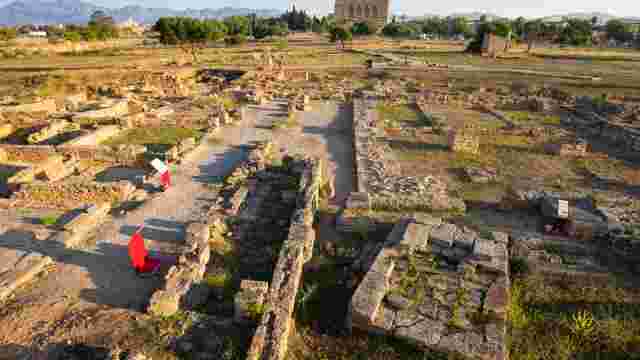
El Fòrum
Roman forum with temple remains, tabernae, an aedicula and a late necropolis. A social and religious centre where excavations continue.
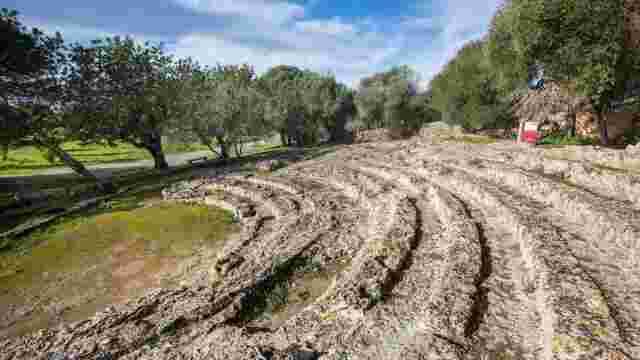
El Teatre Romà
Roman theatre from the 1st century AD carved into the rock, later reused as a necropolis, with preserved cavea, orchestra and stage remains.