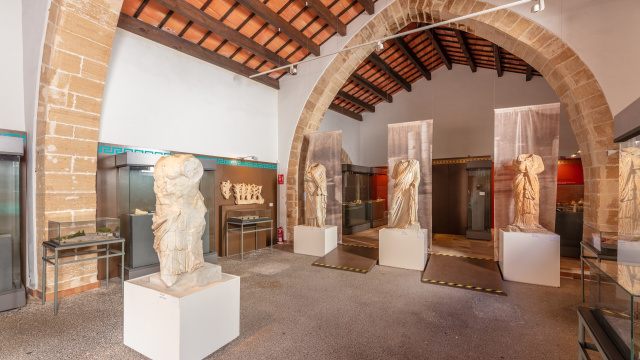
Museu Monogràfic de Pol·lèntia
Museum in a former 16th-century hospital showcasing finds from Pol·lèntia: ceramics, glass, jewellery, marble sculptures and Roman necropolis exhibits.
It is located in the historic centre, in a building that once housed a 16th-century hospital. The museum exhibits pieces recovered from archaeological excavations in Pol·lèntia, an important ceramic collection, as well as various glass objects, jewellery and other items. Notable pieces include three marble sculptures found in the forum area and a bronze female head that gives its name to one of the houses in the Portella quarter where it was discovered. The museum also features an area dedicated to the necropolises of Pol·lèntia, including the inscription of Cornelius Atticus.
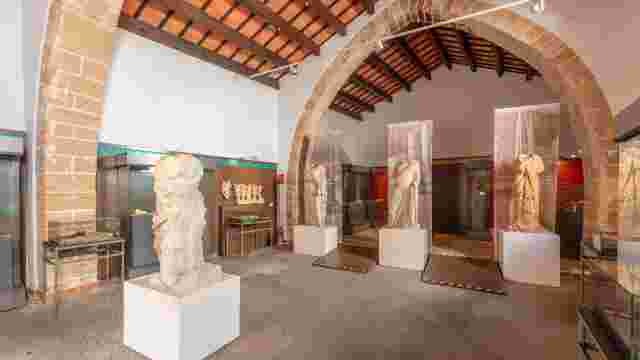
Museu Monogràfic de Pol·lèntia
Museum in a former 16th-century hospital showcasing finds from Pol·lèntia: ceramics, glass, jewellery, marble sculptures and Roman necropolis exhibits.
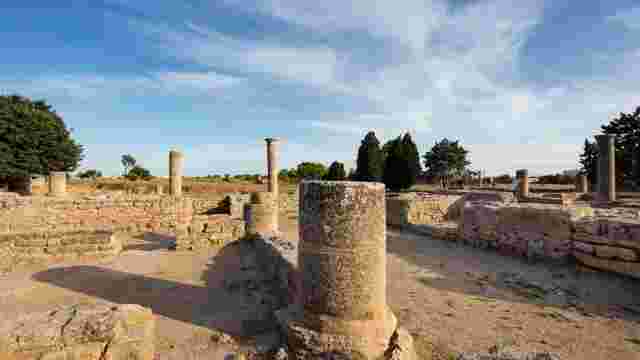
Ciutat romana de Pol·lèntia (zona arqueològica)
Discoveries from the 16th century sparked archaeological research in Pol·lèntia, which continues from early 20th-century excavations to the present.
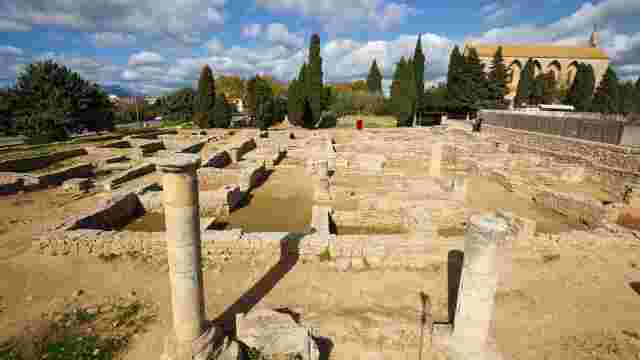
Zona arqueològica
History and excavations of Pol·lèntia from the 16th century to today, with key discoveries and major international archaeological research.
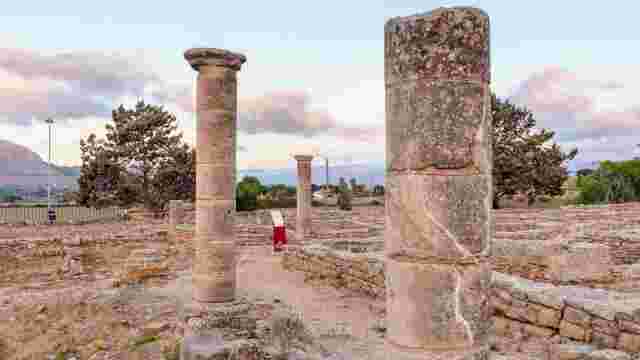
La Portella
Area near the historic centre with Roman houses, workshops, street layout and a preserved section of 3rd-century Roman wall.
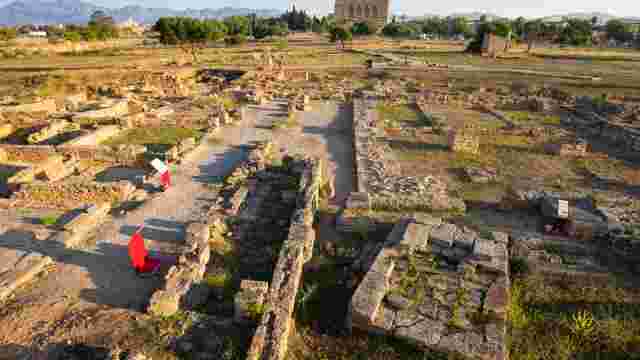
El Fòrum
Roman forum with temple remains, tabernae, an aedicula and a late necropolis. A social and religious centre where excavations continue.
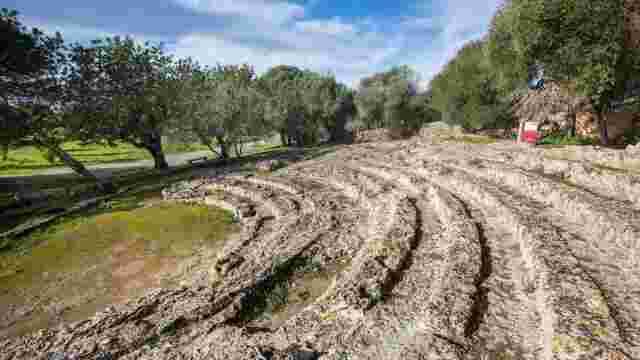
El Teatre Romà
Roman theatre from the 1st century AD carved into the rock, later reused as a necropolis, with preserved cavea, orchestra and stage remains.