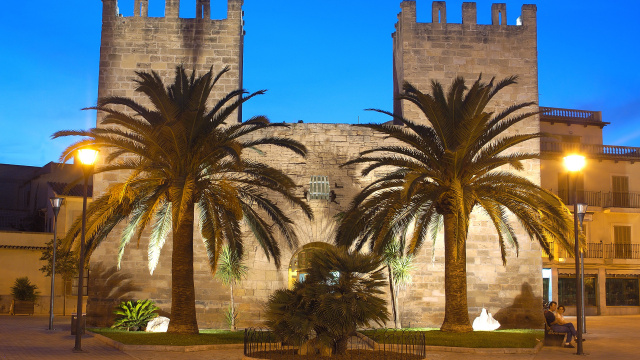
Walled city gates
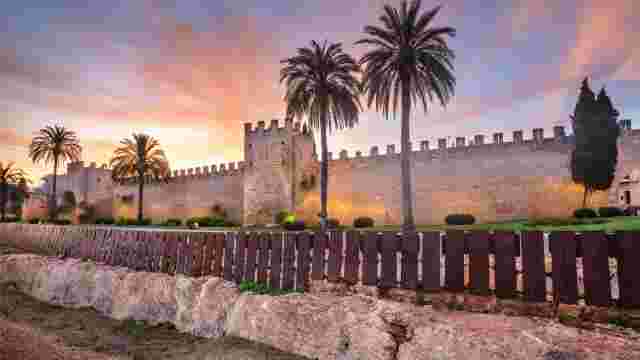
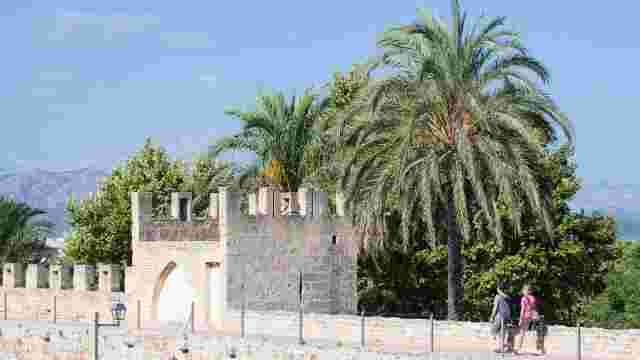
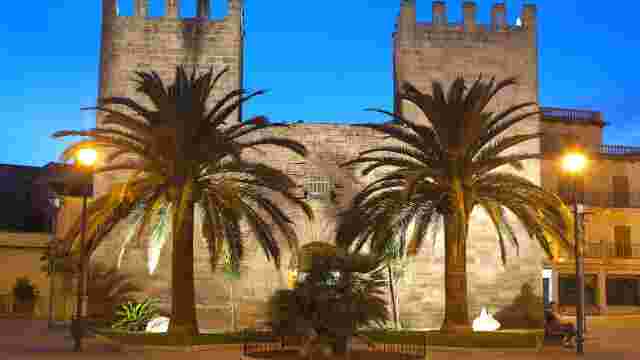
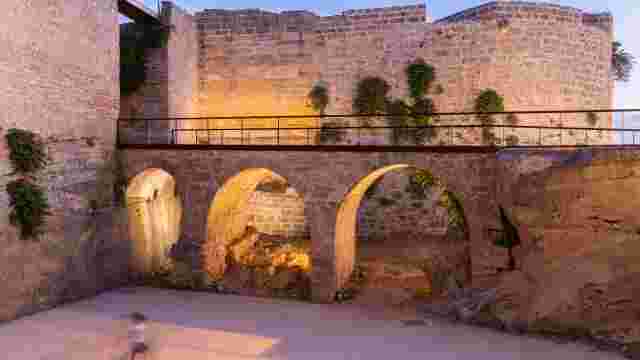
One of the most remarkable features of the medieval wall are its entrance gates. Originally there were three: the Gate of Moll or Xara, the Gate of Mallorca or Sant Sebastià, and the Gate of Vila Roja, which no longer exists today. The Gate of Vila Roja was located in the northwest section of Alcúdia’s medieval fortifications. Due to the scarce documentation, its exact appearance is unknown, although it is believed to have been the weakest gate and therefore besieged on multiple occasions. The bridge, like those of the other gates, was originally a wooden drawbridge. Later, in the 17th century, all were replaced with stone bridges. According to a description by Archduke Ludwig Salvator of Austria: “The Gate of Vila Roja is austere and simple; it shows only the traces of the former drawbridge over the moat, now replaced by a fixed bridge.” Throughout the 20th century and until 2004, the bridge remained buried beneath the filled moat. Once restored, it presents three arches — one small and two larger ones — as well as the original stone paving. The moat, once excavated, has become a public space for open-air events, concerts and theatre, with the bridge as its scenic backdrop. The Gate of Mallorca or Sant Sebastià connected the town of Alcúdia with the royal road to Palma. Today it retains its moat and the structure given to it during the 1963 restoration by G. Alomar: two freestanding towers linked by a large machicolation topped with battlements. A 16th-century coat of arms is also visible. The Gate of Moll or Xara, located at the opposite end of the axis dividing the town and opening toward the main port, has a distinct architectural design. The two towers are connected by a guardhouse with a small window originally protected by a machicolation of which only the supporting corbels remain. The large semicircular arch leads to a covered vaulted passageway where the groove of the former portcullis can still be seen.